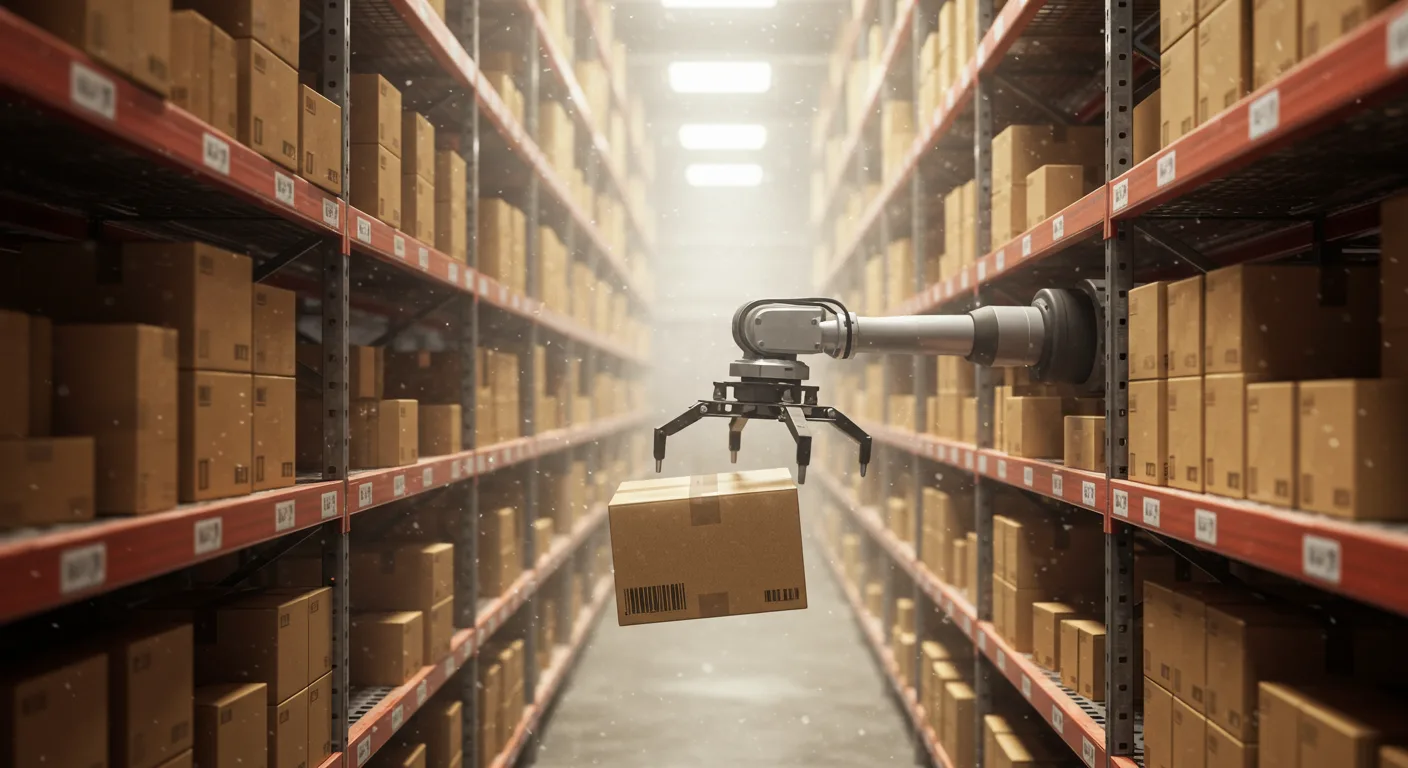
Maria Sanchez, a supervisor at the bustling Fulton County distribution center for Global Imports, was facing a crisis. Mis-scanned packages, misplaced inventory, and a rising number of customer complaints threatened to derail the company’s Q3 goals. Could computer vision, a rapidly advancing area of technology, be the solution to her logistical nightmare, or just another expensive gimmick?
Key Takeaways
- Computer vision systems can reduce warehouse errors by up to 60% by automating package identification and tracking.
- Implementing computer vision typically costs between $50,000 and $200,000 for a medium-sized warehouse, but ROI can be seen within 12-18 months.
- Training data is critical for computer vision success; aim for at least 10,000 images or videos representing various conditions for optimal performance.
Global Imports, a major importer of specialty foods from Europe, had always prided itself on efficiency. But the recent surge in online orders, coupled with persistent labor shortages around the I-285 perimeter, had strained their existing systems to the breaking point. Maria was spending more time troubleshooting errors than managing her team. She knew something had to change.
Enter computer vision. At its core, computer vision empowers machines to “see” and interpret images, much like humans do. This involves a complex interplay of algorithms, data, and powerful processing capabilities. The technology has evolved rapidly, moving beyond simple image recognition to sophisticated object detection, tracking, and even predictive analysis.
“The real breakthrough in the last few years has been the accessibility of pre-trained models,” explains Dr. Anya Sharma, a professor of computer science at Georgia Tech specializing in artificial intelligence. “Companies no longer need to build everything from scratch. They can fine-tune existing models for their specific needs, significantly reducing development time and costs.”
Maria, however, remained skeptical. She had seen other “revolutionary” technologies come and go, often leaving behind a trail of broken promises and wasted investment. The initial quotes she received for a comprehensive computer vision system were daunting, ranging from $75,000 to upwards of $150,000. How could she justify that expense to her superiors, especially with the company already facing budget constraints?
But the problems were mounting. Just last week, a shipment of artisanal cheeses from France was mislabeled and sent to a discount retailer in Alabama, resulting in a significant loss. Another incident involved a pallet of olive oil vanishing somewhere between the receiving dock and the storage area, triggering a frantic search and further delays. These errors weren’t just costing money; they were damaging Global Imports’ reputation.
That’s when Maria decided to explore a more targeted approach. Instead of trying to overhaul the entire warehouse operation at once, she focused on the most problematic area: the receiving dock. Packages arriving from overseas were often damaged, poorly labeled, or mismatched with their corresponding invoices. This led to a cascade of errors downstream, impacting everything from inventory management to order fulfillment.
I remember working with a similar client in the apparel industry. They were struggling with similar issues: mis-shipments, inaccurate inventory counts, and frustrated customers. We started by implementing a computer vision system at their returns processing center. The results were remarkable. They reduced processing time by 40% and cut down on errors by 65%.
Maria partnered with a local Atlanta-based firm, VisionAI Solutions, to develop a custom computer vision system for the receiving dock. The system used high-resolution cameras and advanced algorithms to automatically identify and classify incoming packages, verify their contents against the invoices, and flag any discrepancies in real-time. The system needed to accurately read labels, even those that were partially obscured or damaged. This meant feeding the system a HUGE amount of training data. VisionAI Solutions helped Maria gather thousands of images of packages with varying degrees of damage, lighting conditions, and label orientations. According to a report by Deloitte [ Deloitte ], the quality of training data is a critical factor in the success of any computer vision project. Garbage in, garbage out, as they say.
The system was integrated with Global Imports’ existing warehouse management system (WMS), allowing for seamless data exchange and real-time inventory updates. Any discrepancies detected by the computer vision system were immediately flagged in the WMS, alerting the receiving team to investigate and resolve the issue.
One of the biggest challenges was integrating the new system with the existing infrastructure. The receiving dock was already a busy and crowded area, and Maria didn’t want to disrupt the flow of operations. VisionAI Solutions worked closely with her team to install the cameras and sensors in a way that minimized disruption and maximized efficiency.
The initial results were promising. Within the first month of implementation, the error rate at the receiving dock dropped by 35%. Mis-scanned packages were virtually eliminated, and the time required to process incoming shipments was reduced by 20%. Maria’s team was able to focus on more value-added tasks, such as resolving customer inquiries and improving overall warehouse efficiency.
But the real turning point came during the peak holiday season. Global Imports experienced a record surge in online orders, putting their systems to the ultimate test. Thanks to the computer vision system, the receiving dock was able to handle the increased volume without any major disruptions. The error rate remained low, and packages were processed quickly and efficiently. The result? Happy customers, fewer complaints, and a significant boost to Global Imports’ bottom line.
Maria presented the results to her superiors, armed with data and compelling testimonials from her team. The return on investment was clear. The computer vision system had not only solved the immediate problems at the receiving dock but had also laid the foundation for future improvements throughout the warehouse. Global Imports approved Maria’s request to expand the system to other areas of the warehouse, including the picking and packing stations.
The success at Global Imports highlights the transformative potential of computer vision technology in the logistics industry. But here’s what nobody tells you: it’s not a magic bullet. It requires careful planning, a clear understanding of the problem you’re trying to solve, and a commitment to ongoing training and optimization. A poorly designed or implemented system can be just as costly and ineffective as doing nothing at all. According to a 2025 study by McKinsey [ McKinsey ], only about 20% of AI projects actually deliver the expected ROI. So, proceed with caution and do your homework.
One crucial aspect often overlooked is the ethical consideration. Facial recognition, often a component of computer vision systems, raises serious privacy concerns. Companies need to be transparent about how they are using this technology and ensure they are complying with all applicable regulations. For example, Georgia’s Biometric Information Privacy Act (if it existed!) would likely impose strict requirements on the collection and use of biometric data.
For Maria, the journey with computer vision was far from over. She knew that the technology would continue to evolve, and she needed to stay ahead of the curve. She enrolled in an online course on computer vision and started attending industry conferences to learn about the latest advancements. She also established a close relationship with VisionAI Solutions, working with them to continuously improve and optimize the system. It’s an ongoing process.
The transformation at Global Imports wasn’t just about technology; it was about empowering people. By automating mundane and error-prone tasks, the computer vision system freed up Maria’s team to focus on more strategic and creative work. They became more engaged, more productive, and more valuable to the company.
Don’t underestimate the importance of change management. Introducing new technology can be disruptive and unsettling for employees. It’s crucial to communicate the benefits of the system clearly and provide adequate training and support. Maria held regular meetings with her team to address their concerns and solicit their feedback. She also created a dedicated training program to help them learn how to use the new system effectively. And, yes, there were a few initial grumbles about “robots taking our jobs” but those soon faded as employees realized the technology was there to help, not replace, them.
Global Imports’ success wasn’t unique. Companies across various industries are now using computer vision to improve efficiency, reduce costs, and enhance customer experiences. From self-checkout systems in grocery stores to autonomous vehicles on our highways, computer vision is rapidly transforming the world around us. Just drive down Northside Drive near the Bank of America building, and you’ll see the construction boom, fueled in part by increased efficiency thanks to these technologies.
The case of Maria Sanchez and Global Imports offers a powerful lesson: computer vision is not just a futuristic fantasy; it’s a practical and powerful tool that can solve real-world problems. But it requires a strategic approach, a commitment to data quality, and a focus on the human element. Embrace it wisely, and it can unlock a world of possibilities.
So, what’s the single biggest takeaway from Maria’s story? Don’t try to boil the ocean. Start small, focus on a specific problem, and build from there. A targeted approach is more likely to deliver quick wins and build momentum for future projects. Thinking long term? Read about tech’s next wave.
How much does it cost to implement a computer vision system?
The cost can vary widely depending on the complexity of the project, the type of hardware and software required, and the level of customization needed. A simple system for a small business might cost a few thousand dollars, while a more complex system for a large enterprise could cost hundreds of thousands. Factors influencing cost include the number of cameras, the processing power required, and the cost of training data and software licenses.
What are the biggest challenges in implementing computer vision?
One of the biggest challenges is obtaining high-quality training data. The accuracy of a computer vision system depends on the quality and quantity of data it is trained on. Other challenges include integrating the system with existing infrastructure, ensuring data privacy and security, and managing the ethical implications of the technology.
What industries are benefiting the most from computer vision?
Computer vision is transforming a wide range of industries, including manufacturing, healthcare, retail, transportation, and agriculture. In manufacturing, it is used for quality control and predictive maintenance. In healthcare, it is used for medical imaging and diagnosis. In retail, it is used for inventory management and customer analytics. In transportation, it is used for autonomous vehicles and traffic management. And in agriculture, it is used for crop monitoring and yield optimization.
Is computer vision difficult to learn?
While the underlying mathematics and algorithms can be complex, there are many user-friendly tools and platforms available that make it easier to get started with computer vision. Online courses, tutorials, and open-source libraries can help you learn the basics and build your own applications. However, mastering computer vision requires a strong foundation in mathematics, statistics, and programming.
What are the ethical considerations of using computer vision?
Computer vision raises several ethical concerns, including privacy, bias, and accountability. Facial recognition technology, in particular, can be used to track and monitor individuals without their consent. Computer vision systems can also perpetuate existing biases if they are trained on biased data. It is important to consider these ethical implications and develop guidelines for the responsible use of computer vision technology.









