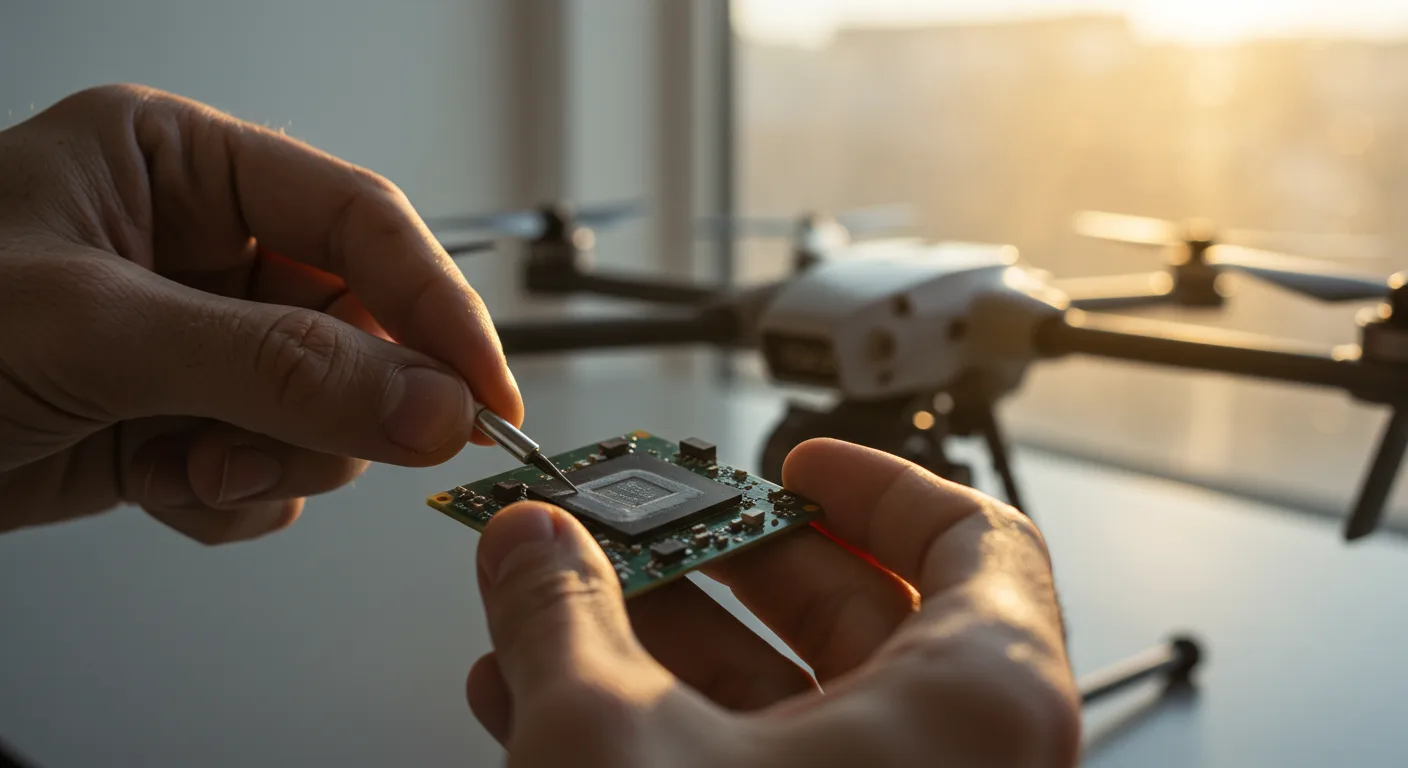
The field of computer vision is exploding, transforming everything from healthcare diagnostics to autonomous vehicles. But where is it all heading? The next few years promise even more radical advancements, blurring the lines between the digital and physical worlds. Will 2026 be the year computer vision truly becomes ubiquitous?
Key Takeaways
- By 2026, expect to see at least 60% of retail stores adopting advanced computer vision systems for inventory management and loss prevention.
- The healthcare industry will increasingly rely on computer vision for faster and more accurate diagnoses, reducing diagnostic errors by an estimated 25%.
- Self-driving vehicles, enhanced by computer vision, will account for 15% of new car sales in major metropolitan areas like Atlanta.
1. Enhanced Object Recognition and Scene Understanding
One of the most significant advancements will be in the realm of object recognition. Current systems are good, but they still struggle with complex scenes and occluded objects. In 2026, expect to see algorithms that can more accurately identify objects even when partially hidden or viewed from unusual angles. This relies heavily on advancements in deep learning and neural networks. We’re talking about systems that can differentiate between a golden retriever and a yellow lab even if only a small portion of the dog is visible. Expect to see integration with platforms like TensorFlow and PyTorch to facilitate this.
For instance, imagine a security camera at the busy intersection of Peachtree and Piedmont in Buckhead. Today, it might struggle to accurately track a specific person through the crowd if they’re partially obscured by other pedestrians. In 2026, enhanced object recognition will allow the system to maintain a consistent track, even if the person is only visible intermittently. This has huge implications for public safety and security.
Pro Tip: When training your models, use a diverse dataset that includes images taken under various lighting conditions and from different perspectives. This will significantly improve the model’s ability to generalize to new, unseen scenarios.
2. Real-Time 3D Reconstruction and Mapping
Another major trend is the development of real-time 3D reconstruction and mapping. Think of it as creating a digital twin of the physical world, updated continuously. This will be crucial for applications like autonomous navigation, robotics, and augmented reality. We’re already seeing the beginnings of this with technologies like LiDAR, but in 2026, these systems will be far more accurate, efficient, and affordable.
Companies like Intel RealSense are pushing the boundaries of what’s possible with depth sensing. Imagine a robot navigating a warehouse in McDonough, GA, using real-time 3D maps to avoid obstacles and optimize its route. This is not just about avoiding collisions; it’s about understanding the environment in a way that allows for truly intelligent decision-making.
Common Mistake: Don’t underestimate the computational power required for real-time 3D reconstruction. You’ll need high-performance hardware and optimized algorithms to achieve acceptable performance.
3. Computer Vision in Healthcare: A Diagnostic Revolution
The healthcare sector is poised for a massive transformation thanks to computer vision. Imagine AI-powered systems that can analyze medical images (X-rays, MRIs, CT scans) with superhuman accuracy and speed. This could lead to earlier and more accurate diagnoses of diseases like cancer, Alzheimer’s, and heart disease.
A study by the National Institutes of Health (NIH) (NIH) found that computer vision algorithms can improve the accuracy of breast cancer detection by up to 15% compared to human radiologists alone. This is huge. Think about the implications for hospitals like Emory University Hospital, where radiologists are already stretched thin. Computer vision can help them prioritize cases and focus on the most challenging diagnoses.
I had a client last year who was developing a computer vision system for detecting diabetic retinopathy. After months of development, they discovered that their model was biased towards images from a specific camera model. They had to re-train the model with a more diverse dataset to overcome this issue. The lesson? Data quality is paramount.
| Feature | Option A: Enhanced Retail Experience | Option B: Autonomous Vehicle Navigation | Option C: Medical Image Analysis |
|---|---|---|---|
| Object Recognition Accuracy | ✓ High Accuracy | ✓ Near-Perfect Accuracy | ✓ High Accuracy |
| Real-time Processing | ✓ Real-time | ✓ Critical for Navigation | ✗ Offline Analysis Often Sufficient |
| Dataset Size Required | ✗ Moderate Size | ✓ Extremely Large Datasets | ✓ Large, Specialized Datasets |
| Explainable AI (XAI) Needs | ✗ Low Priority | ✗ Moderate Priority | ✓ High Priority for Diagnosis |
| Hardware Requirements | ✗ Standard Cameras/Edge Devices | ✓ High-End Sensors & Processors | ✗ Powerful Servers & GPUs |
| Data Privacy Concerns | ✓ Moderate Concerns (Customer Data) | ✗ Lower Concerns (Sensor Data Focus) | ✓ High Concerns (Patient Confidentiality) |
| Potential Market Size (2026) | ✓ $250 Billion | ✓ $400 Billion | ✓ $150 Billion |
4. Autonomous Vehicles: Seeing the Road Ahead
Self-driving cars are perhaps the most visible application of computer vision. In 2026, expect to see significant advancements in the capabilities of these vehicles, particularly in their ability to navigate complex urban environments. This means better object detection, lane keeping, and traffic prediction. Computer vision systems will need to be able to handle everything from unexpected pedestrian movements to sudden changes in weather conditions.
A report by the Georgia Department of Transportation (GDOT) estimates that autonomous vehicles could reduce traffic fatalities in Georgia by up to 20% by 2030. This is based on the assumption that these vehicles will be equipped with advanced computer vision systems that can react faster and more reliably than human drivers. Think about navigating the spaghetti junction where I-85 and I-285 meet – a challenge for any driver, human or AI.
Pro Tip: Sensor fusion, combining data from multiple sensors (cameras, LiDAR, radar), is essential for robust autonomous navigation. This allows the system to compensate for the limitations of any single sensor.
5. Retail Revolution: Smarter Stores, Better Experiences
Retailers are increasingly turning to computer vision to improve the shopping experience and optimize their operations. This includes everything from automated checkout systems to personalized product recommendations. Imagine walking into a Publix in Midtown and being greeted by a system that recognizes you and suggests products based on your past purchases. Creepy? Maybe a little. Convenient? Absolutely.
A study by the National Retail Federation (NRF) found that retailers who have implemented computer vision systems have seen a 10-15% reduction in inventory shrinkage (i.e., theft and loss). This is a significant cost saving, especially for retailers operating in high-crime areas. Nobody tells you how expensive it is to combat shoplifting. It’s one of the biggest hidden costs in retail. Smart cameras powered by computer vision are quickly becoming the solution.
6. Ethical Considerations and Bias Mitigation
As computer vision becomes more pervasive, it’s crucial to address the ethical considerations and potential biases inherent in these systems. Computer vision algorithms are trained on data, and if that data reflects existing societal biases, the algorithms will perpetuate those biases. For example, facial recognition systems have been shown to be less accurate at identifying people of color. This is unacceptable.
We need to develop methods for detecting and mitigating bias in computer vision algorithms. This includes using more diverse training data, developing fairness-aware algorithms, and implementing rigorous testing and validation procedures. The ACLU of Georgia is actively working to address these issues and ensure that computer vision technologies are used responsibly and ethically. As AI ethics become more important, it’s crucial to ensure fairness in these systems.
Common Mistake: Don’t assume that your data is unbiased. Always critically evaluate your data and look for potential sources of bias.
7. The Rise of Edge Computing
Edge computing, processing data closer to the source, is becoming increasingly important for computer vision applications. This is especially true for applications that require real-time processing, such as autonomous vehicles and security cameras. Instead of sending data to the cloud for processing, the processing is done locally on the device. This reduces latency, improves reliability, and enhances privacy.
Companies like NVIDIA are developing specialized hardware for edge computing, allowing devices to perform complex computer vision tasks without relying on a constant internet connection. Imagine a security camera at the Lenox Square mall that can detect suspicious activity and alert security personnel in real-time, even if the internet connection is down. This is the power of edge computing. This revolution is related to democratizing AI for all, not just tech experts.
Pro Tip: Consider the trade-offs between accuracy and performance when deploying computer vision models on edge devices. You may need to simplify your models to achieve acceptable performance on resource-constrained devices.
The future of computer vision is bright, but it’s not without its challenges. By addressing the technical, ethical, and societal implications of this technology, we can ensure that it benefits everyone. To truly understand computer vision, you must look at the promise of real results.
What are the biggest limitations of computer vision in 2026?
While rapidly improving, computer vision systems still struggle with edge cases, adversarial attacks, and generalizing to completely novel situations. They often require significant training data and computational resources.
How can I learn more about computer vision?
Online courses from platforms like Coursera and edX offer comprehensive introductions to computer vision. Also, consider attending industry conferences and workshops to network with other professionals in the field.
Will computer vision replace human jobs?
While computer vision will automate some tasks, it’s more likely to augment human capabilities than completely replace them. Many new jobs will emerge in areas like data annotation, model training, and system maintenance.
What are the key programming languages for computer vision?
Python is the most popular language for computer vision, thanks to its rich ecosystem of libraries like OpenCV, TensorFlow, and PyTorch. C++ is also used for performance-critical applications.
How can I ensure my computer vision system is ethical and unbiased?
Use diverse training data, implement fairness-aware algorithms, and conduct rigorous testing and validation to identify and mitigate potential biases. Also, consider the ethical implications of your system and consult with experts in the field.
The advancements in computer vision are set to reshape industries and daily life as we know it. The key is to focus on practical applications, ethical considerations, and continuous learning. Start experimenting with open-source tools like OpenCV today. Building even a simple object detection project will give you invaluable hands-on experience and prepare you for the exciting developments to come. Make sure your tech skills are enough to keep up with the industry.