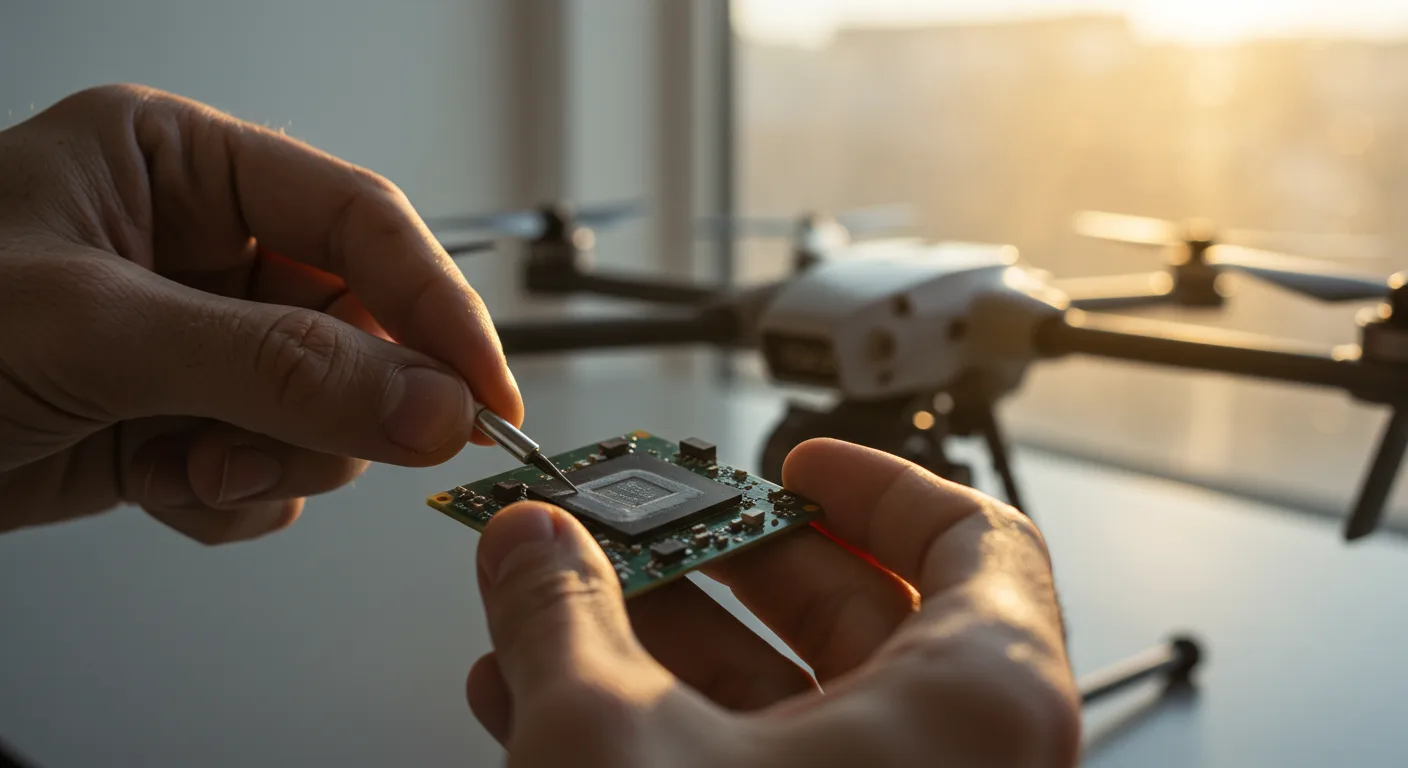
The year is 2026, and the pace of innovation in computer vision shows no signs of slowing down. We’re moving beyond simple object recognition into an era where machines don’t just “see” but genuinely interpret and anticipate. What truly awaits us in this next wave of technological advancement?
Key Takeaways
- Computer vision will increasingly integrate with edge computing, enabling real-time decision-making without constant cloud reliance.
- The market for AI-powered visual inspection in manufacturing is projected to exceed $10 billion by 2030, driven by demand for defect detection and quality control.
- Explainable AI (XAI) will become a critical requirement for computer vision systems, moving beyond black-box models to provide transparent decision logic.
- The proliferation of synthetic data generation will significantly reduce the cost and time associated with training robust computer vision models.
- New regulatory frameworks will emerge to address privacy concerns related to pervasive visual data collection, particularly in public and commercial spaces.
1. Embracing Edge AI for Real-Time Responsiveness
One of the most significant shifts I’m seeing is the aggressive push towards edge AI. We’re talking about processing visual data directly on devices, not sending everything back to a centralized cloud. This isn’t just about speed; it’s about reliability and data privacy. Imagine a smart factory floor, like the one I consulted for last year in Dalton, Georgia, where their automated optical inspection (AOI) systems need to identify microscopic defects on carpet fibers instantly. Waiting even a few milliseconds for cloud processing can mean hundreds of feet of defective product. That’s why I strongly advocate for deploying models directly onto specialized hardware.
Pro Tip: When planning an edge AI deployment, don’t underestimate the importance of hardware selection. Tools like NVIDIA Jetson modules or Intel Movidius VPUs are purpose-built for this, offering significant performance gains over general-purpose CPUs for vision tasks. We typically configure these with a lightweight Linux distribution, like Ubuntu Core, and deploy containerized models using Docker for consistent environments.
Screenshot Description: A console screenshot showing a Docker command deploying a pre-trained YOLOv8 model onto an NVIDIA Jetson device, with output indicating successful deployment and initial inference speed of 30 FPS on a test stream.
2. The Rise of Synthetic Data Generation
Training robust computer vision models traditionally requires vast, meticulously labeled datasets. This is incredibly expensive and time-consuming. My firm, like many others, spent countless hours annotating images for clients. However, the game is changing with synthetic data generation. We’re now creating photorealistic datasets using advanced 3D rendering engines and generative AI. This allows us to simulate rare events, create diverse lighting conditions, and generate endless variations without ever touching a real camera.
According to a Gartner report, synthetic data will account for over 60% of the data used in AI model development by 2028. This isn’t just a trend; it’s a fundamental shift in how we approach data acquisition. For instance, in developing autonomous vehicle perception systems, simulating hazardous weather conditions or unusual road debris is far safer and more scalable with synthetic data than trying to capture it all in the real world.
Common Mistake: Over-reliance on purely synthetic data without proper domain adaptation can lead to “reality gap” issues, where models perform poorly on real-world inputs. Always validate synthetic-trained models with a smaller, carefully curated set of real-world data and employ techniques like transfer learning or fine-tuning with actual data.
3. Explainable AI (XAI) as a Mandate
The days of “black box” AI are numbered, especially in critical applications. Regulators, businesses, and consumers are increasingly demanding transparency. They want to know why a computer vision system made a particular decision. This is where Explainable AI (XAI) becomes paramount. We’re moving beyond simply getting a correct answer; we need to understand the reasoning behind it.
For example, in medical imaging, if an AI flags a potential tumor, a doctor needs to see exactly which features of the scan led to that conclusion. Simply saying “AI detected it” isn’t sufficient for diagnosis or liability. Tools like LIME (Local Interpretable Model-agnostic Explanations) and Grad-CAM (Gradient-weighted Class Activation Mapping) are becoming standard in our toolkit. These methods help visualize which parts of an image contributed most to a model’s prediction, offering crucial insights.
Screenshot Description: An image showing a medical MRI scan with a Grad-CAM heatmap overlay, highlighting the specific regions (in red/yellow) that the convolutional neural network identified as indicative of a pathology.
4. Hyper-Personalization and Contextual Awareness
Computer vision isn’t just for industrial applications; it’s profoundly impacting consumer experiences. We’re seeing a surge in systems that can infer user intent and preferences based on visual cues. Think beyond simple facial recognition. We’re talking about systems that can interpret body language, gaze direction, and even micro-expressions to tailor interactions in real-time. This isn’t just about creepy surveillance; it’s about creating genuinely intuitive interfaces.
Consider the retail sector. A smart fitting room could use computer vision to analyze how clothes fit, suggest complementary items based on body type and style preferences, and even predict emotional responses to outfits. This level of hyper-personalization requires robust models capable of nuanced interpretation, not just identification. It also means grappling with significant ethical considerations around privacy and consent, which I believe will drive new industry standards.
Editorial Aside: While the potential for personalized experiences is immense, I worry about the potential for misuse. Companies must prioritize transparent data handling and give users clear control over their visual data. Without that, public trust will erode, and adoption will suffer.
| Factor | Current (2023) Capabilities | Projected (2026) Advancements |
|---|---|---|
| Object Recognition Accuracy | ~92% for common objects, limited context. | ~98% with nuanced contextual understanding. |
| 3D Scene Understanding | Basic depth estimation, static scene mapping. | Dynamic, real-time 3D reconstruction, object interaction. |
| Action & Intent Prediction | Simple activity detection, short-term forecasting. | Complex human intent prediction, proactive assistance. |
| Edge Device Performance | Limited models, specific tasks, high latency. | Sophisticated models, multi-tasking, near real-time. |
| Synthetic Data Efficacy | Requires significant real-world fine-tuning. | Near-photorealistic, greatly reducing real-data needs. |
5. The Integration of Multi-Modal AI
The future of computer vision isn’t just about images; it’s about images combined with other data streams. We call this multi-modal AI. Imagine a system that not only sees a pedestrian but also hears the sound of an approaching vehicle and reads text from nearby street signs. This richer context allows for far more accurate and robust decision-making, particularly in complex environments like autonomous driving or robotic navigation.
We’re seeing this play out in advanced robotics. For instance, a robotic arm performing intricate assembly tasks in a factory near Atlanta, Georgia, might combine visual input from high-resolution cameras with haptic feedback from its grippers and acoustic data from its environment to detect anomalies or improve precision. This fusion of sensory data provides a more complete “understanding” of the operational space.
Pro Tip: When developing multi-modal systems, data synchronization is paramount. Ensure all sensory inputs are timestamped and aligned precisely. Frameworks like PyTorch or TensorFlow, combined with specialized libraries for sensor fusion, are essential for managing these complex data pipelines.
Screenshot Description: A block diagram illustrating a multi-modal AI architecture, showing inputs from camera, lidar, radar, and audio sensors converging into a fusion layer before feeding into a unified perception model.
6. Addressing Ethical AI and Regulatory Frameworks
With the increasing pervasiveness of computer vision, especially in public spaces, ethical considerations and regulatory frameworks are no longer optional – they’re mandatory. We’re past the point where we can simply build technology without considering its societal impact. I predict a significant increase in legislation mirroring the European Union’s proposed AI Act, which categorizes AI systems by risk level and imposes strict requirements on high-risk applications, including those involving biometric identification.
This means that developers and deployers of computer vision systems will need to prioritize fairness, accountability, and transparency from the outset. Bias detection and mitigation tools, privacy-preserving techniques like differential privacy and federated learning, and robust auditing mechanisms will become standard practice. My firm routinely conducts ethical AI assessments for clients, evaluating everything from data bias in training sets to potential discriminatory outcomes in deployment. It’s not just good practice; it’s becoming a legal necessity.
Common Mistake: Ignoring ethical considerations until post-deployment. This leads to costly remediation and potential reputational damage. Integrate ethical AI principles, including bias audits and privacy-by-design, into every stage of the development lifecycle, right from the initial concept phase.
The future of computer vision is bright, but it demands thoughtful development, ethical deployment, and a keen eye on emerging regulatory landscapes to ensure its benefits are realized responsibly. For more insights on the broader landscape of AI risks and rewards, consider our detailed analysis.
What is the primary driver for the adoption of edge AI in computer vision?
The primary driver is the need for real-time processing and decision-making in applications where cloud latency is unacceptable, such as autonomous vehicles, industrial automation, and immediate security alerts. It also offers enhanced data privacy by keeping sensitive visual data local.
How does synthetic data generation address challenges in computer vision development?
Synthetic data generation significantly reduces the cost and time associated with acquiring and labeling large datasets. It allows developers to create diverse scenarios, simulate rare events, and generate specific data variations that are difficult or impossible to capture in the real world, thereby improving model robustness and reducing bias.
Why is Explainable AI (XAI) becoming so important for computer vision?
XAI is crucial for building trust, enabling debugging, and ensuring accountability in computer vision systems. It allows users and stakeholders to understand why a model made a particular decision, which is vital for regulatory compliance, risk assessment, and adoption in high-stakes fields like healthcare, finance, and autonomous systems.
What is multi-modal AI in the context of computer vision?
Multi-modal AI integrates visual data with other sensory inputs, such as audio, text, lidar, or radar, to create a more comprehensive understanding of an environment or situation. This fusion of different data streams leads to more robust, accurate, and contextually aware computer vision systems, particularly in complex real-world scenarios.
What are the main ethical concerns surrounding the expansion of computer vision technology?
Key ethical concerns include data privacy, potential for surveillance, algorithmic bias (leading to discriminatory outcomes), lack of transparency in decision-making, and the implications for human autonomy. Addressing these requires robust regulatory frameworks, privacy-by-design principles, and continuous ethical auditing of systems.















